


Local business owners today face a constant barrage of advice about how to show up online. You might hear one expert screaming that TikTok is the only way to survive, while another insists that deep, high-quality YouTube videos are the key to building authority. It feels like you need a full scale film crew just to sell a pizza or fix a leaky faucet. But for a local business, the goal isn’t just to get views; it’s to get people through the front door.
The debate between Short-Form Video vs. Long-Form: What Actually Works for Local Businesses often boils down to time and attention. Short-form video typically refers to vertical clips under 60 seconds, while long-form covers anything from three minutes to over an hour. Both have specific psychological effects on your neighbors. Understanding when to use a quick 15vsecond “hook” and when to offer a 10vminute “deep dive” is the difference between shouting into the void and actually growing your revenue.
The Format Showdown: Quick Hits Versus Deep Dives
Short-form video has completely taken over how we consume content on our phones. Platforms like Instagram Reels and TikTok thrive on speed and visual excitement. For a neighborhood bakery, a 15vsecond clip of a knife slicing through a fresh sourdough loaf can reach thousands of local residents in a single afternoon. It’s low-friction, high-energy, and requires very little commitment from the viewer.
Long-form video serves a different master: trust and education. If you’re a local contractor or a financial advisor, a 10vsecond clip doesn’t give you enough time to prove you know what you’re talking about. A 5vminute walkthrough of a recent kitchen remodel or a detailed explanation of local tax changes allows you to build a real connection. This is where you transition from a “business nearby” to a “trusted expert.”
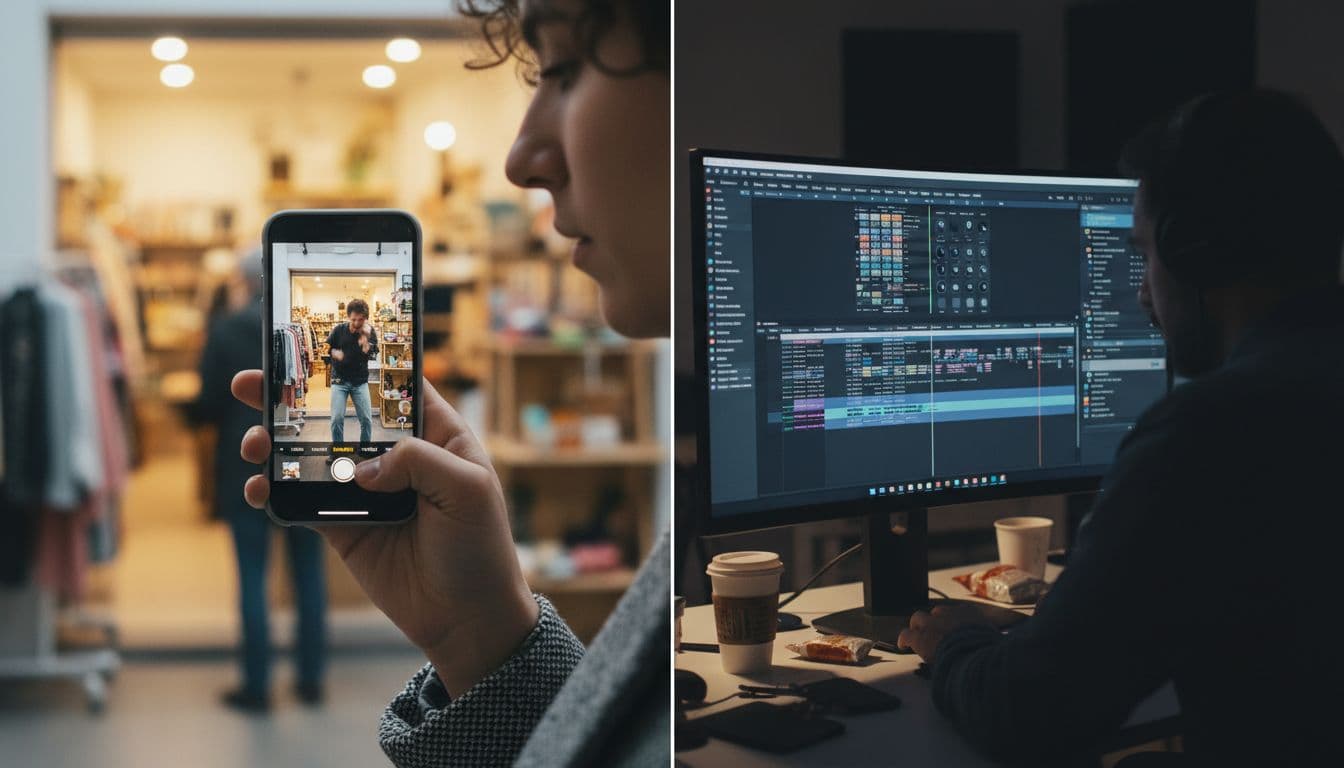
Finding the right balance depends on your specific industry. A bathroom renovator might use short clips to show “before and after” reveals to grab attention, while using longer videos to explain their design process. If you want a more structured approach, following a 90-day social media roadmap for local dominance can help you stagger these different formats effectively.
Why Short-Form Video Dominates Daily Local Discovery

By March 2026, the local search “landscape” has shifted significantly. People don’t always go to a search engine and type “mechanic near me.” Instead, they browse their social feeds and see a funny, engaging video from a local shop. Short-form video works because it mimics how we talk to our friends. It’s fast, punchy, and highly personal.
The “algorithm” in 2026 is smarter about location than ever before. When you post a vertical video and include your city name in the caption, social apps prioritize showing that content to people within a 10vmile radius. This creates a “digital storefront” that never closes. You’re not just hoping people find you; you’re actively showing up in their living rooms while they scroll.
| Video Type | Best Use Case | Ideal Length | Key Benefit |
|---|---|---|---|
| Short-Form | Product teasers, employee intros | 15–40 seconds | Extreme local reach |
| Long-Form | Tutorials, behind-the-scenes | 3–10 minutes | Deep trust building |
| Live Stream | Q&As, event coverage | 15+ minutes | High engagement |
The takeaway is that short-form should be your “volume” play. It keeps your brand top of mind without requiring a massive production budget or a Hollywood script.
Building Authority Through Strategic Long-Form Content
While short-form grabs the eye, long-form content is what closes the deal for high-ticket services. Imagine you’re looking for a local lawyer or an estate planner. A 15vsecond dance video isn’t going to convince you to hire them. However, a 7vminute video where the lawyer calmly explains the three most common mistakes people make in probate court builds immense credibility.
Long-form video is often “evergreen,” meaning it continues to provide value for years. A well-made YouTube video about “How to maintain your HVAC system in our local climate” will get views every single winter. This content acts as a 24/7 salesperson. It answers the questions your customers are already asking, which saves you and your staff time in the long run.
Engagement also tends to be much higher on longer videos for those who actually watch. If someone spends eight minutes watching you explain your craft, they’ve already decided they like your style. These viewers are significantly more likely to book an appointment or visit your store because they’ve already “met” you through the screen.
Local Authenticity and the “Behind the Scenes” Edge
In 2026, viewers can smell a fake corporate ad from a mile away. They crave what is often called “hyper-local realness.” This means your videos don’t need to be perfect; they need to be real. A video of a local florist showing her messy workbench or a mechanic with grease on his hands feels more trustworthy than a polished studio commercial.
This authenticity is incredibly powerful when combined with building trust with local influencers. When a neighbor or a local creator shares a raw, unedited look at your business, it carries more weight than any paid advertisement. People want to see the human beings behind the logo. They want to know that if they walk into your shop, they’re going to see the same friendly faces they saw on their phone.
Short-form is perfect for this “raw” style. It’s meant to be filmed on the go, often with a smartphone in one hand. Don’t worry about lighting or perfect sound; focus on being helpful. If a customer asks a question, grab your phone and record a quick video answer right then and there. That’s the kind of content that resonates in a close-knit community.
Choosing the Right Mix for Your Local Market
So, how do you decide where to put your energy? The answer lies in your sales cycle. If your business relies on quick, impulse buys—like a coffee shop or a boutique—short-form video is your best friend. You need to show something beautiful or exciting that makes someone say, “I want that right now.” You can even use an effective local social media strategy to ensure these quick clips hit the right people at the right time.
If your business involves a long decision-making process—like real estate, landscaping, or medical services—you need both. Use short-form to bring people into the “funnel” and long-form to keep them there until they’re ready to buy.
- Step 1: Film 3–5 short clips per week showing daily life or quick tips.
- Step 2: Record 1 longer video every two weeks that answers a deep customer question.
- Step 3: Use the short clips to “tease” the long video to drive more traffic.
Conclusion
The battle between short and long video isn’t about choosing one winner; it’s about using the right tool for the job. Short-form video is your megaphone to reach the neighborhood, while long-form is your handshake to build a lasting relationship. By 2026, local customers expect to see both the “quick highlights” and the “expert depth” of your business online.
The most important thing is to simply start filming. Your community doesn’t want perfection; they want you. Grab your phone, show your face, and share what makes your business special. Whether it’s a 15vsecond pulse of energy or a 10vminute masterclass, your local audience is waiting to see what you have to offer. Focus on being a helpful neighbor first, and the marketing results will follow naturally.


